What Is a Pendulum? A Gentle Guide to Using It
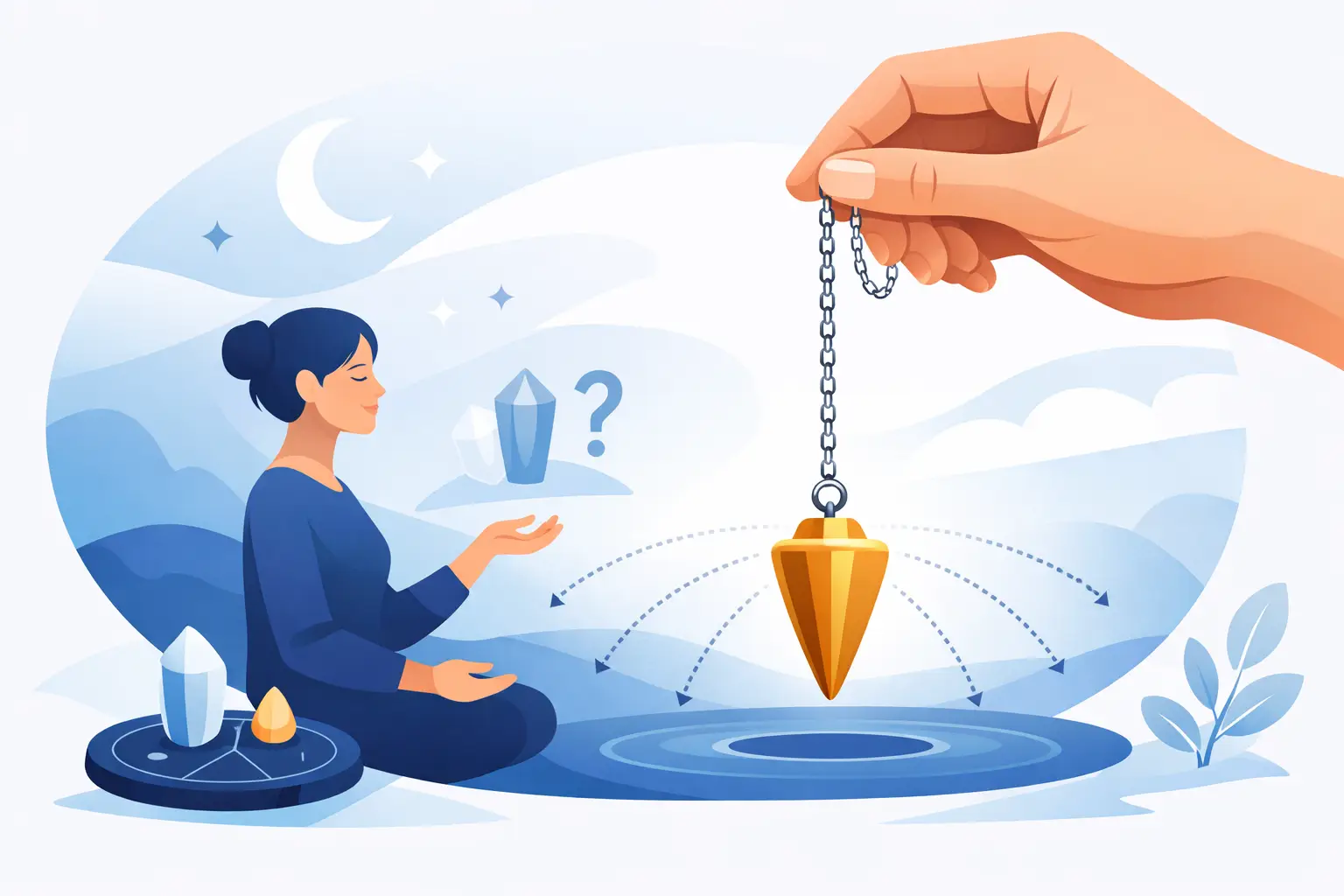
A pendulum can be as simple as a small crystal suspended from a chain, yet many people find that this quiet tool creates a valuable pause before they act. So, what is a pendulum? In both science and spiritual practice, it is a weighted object that hangs freely and swings in response to movement. The difference lies in how and why it is used.
For a moment of reflection, a pendulum offers something beautifully uncomplicated: a question, a still hand and space to listen to your own inner wisdom. It is not about handing your choices to an object. Used gently, it can become part of a mindful ritual for checking in with yourself when life feels noisy or your thoughts are pulling in different directions.
What Is a Pendulum Used For?
In physics, a pendulum is a weight hanging from a fixed point that swings back and forth under the pull of gravity. Clocks have famously used pendulums to keep time, while scientists use them to explore motion, energy and the Earth's rotation.
A spiritual pendulum works on the same basic principle, but is usually held from the end of its chain or cord. It may be made from a crystal such as clear quartz, amethyst or rose quartz, though brass, wood and other natural materials are also common. The gentle swings, circles or stillness are interpreted as responses to a focused question.
People may use a pendulum during meditation, before journalling, alongside tarot or oracle cards, or as part of an energy-clearing ritual. For some, it is a form of dowsing used to explore intuitive yes-or-no questions. For others, it is simply a calming object that helps them slow down and notice what they already feel.
There is no single right reason to use one. A pendulum may suit someone who enjoys spiritual tools and ritual, while another person may prefer breathwork, a walk outdoors or writing freely in a journal. It depends on what helps you feel present and supported.
How Does a Spiritual Pendulum Move?
When you hold a pendulum as still as possible, tiny movements in your hand and body can influence its direction. These movements may be so subtle that you are not consciously aware of making them. This is often called the ideomotor effect, and it helps explain why pendulums can seem to respond so clearly.
For many spiritual practitioners, that does not make the experience meaningless. Rather than treating the pendulum as an all-knowing authority, it can be viewed as a focus for intuition, subconscious thoughts and emotional awareness. The value may be in the moment of honesty it encourages: what response were you hoping for, resisting or already leaning towards?
Pendulum work is a personal spiritual practice, not a scientific method for predicting the future or diagnosing health concerns. It should never replace advice from a GP, qualified therapist, financial professional or other appropriate expert. If a question involves your safety, health or a major life decision, use practical information and professional support alongside any reflective ritual.
Choosing a Pendulum That Feels Right
A pendulum does not need to be expensive or elaborate to be useful. Its weight and balance matter more than a perfect shape. It should hang comfortably, move freely and feel easy for you to hold without straining your hand.
Crystal pendulums are popular because people often connect their chosen stone with a particular intention. Clear quartz is frequently chosen for clarity and amplification, amethyst for calm reflection and spiritual connection, and rose quartz for self-compassion and matters of the heart. These associations can offer a meaningful starting point, but your own response matters most.
You might be drawn to a pendulum because of its colour, shape or the feeling it brings when you hold it. Trust that first gentle instinct. If a crystal tip feels too delicate for everyday use, a metal pendulum may be more practical. If you plan to carry it in a bag, consider a small pouch to help protect it from chips and tangles.
How to Use a Pendulum for the First Time
Begin somewhere quiet, where you are unlikely to be interrupted. Sit comfortably with both feet supported if possible, take a few slower breaths, and rest your elbow on a table or your knee. Hold the chain between your thumb and first finger, allowing the weighted end to hang freely.
Before asking a question, establish what each movement means for you. Some people ask the pendulum to show them a yes, then a no, and then perhaps a response for uncertain or unclear. You may find that yes appears as a forward-and-back swing while no moves side to side, or that one response forms a circle. Do not worry if the movements are small at first.
Keep your questions simple and present-focused. Instead of asking, “Will everything work out?” try, “Would a quiet evening at home support me tonight?” or “Do I need more information before making this choice?” Clear questions make it easier to reflect on the answer without forcing a meaning onto the movement.
It can help to start with questions you already know, such as “Is my name [your name]?” This is not a test you can fail. It is simply a way to become familiar with how the pendulum feels in your hand and how readily it moves.
If the pendulum is still, erratic or gives a response that feels confusing, stop and return another time. Tiredness, strong emotion and a desire for a particular answer can all make a session feel less clear. A glass of water, a few deep breaths or a short break can be more helpful than repeatedly asking the same question.
A gentle question to ask yourself first
Before you begin, try asking: “Am I calm enough to hear an answer I do not expect?” That one question can keep pendulum work rooted in self-care rather than anxiety. If the answer feels like no, choose comfort first. Light a candle, make a cup of tea, write down what is worrying you or simply leave the practice for another day.
Cleansing and Caring for Your Pendulum
Many people like to cleanse a new pendulum before using it, especially if it will become part of regular meditation or energy work. This can be a simple act of intention rather than a complicated ceremony. You might hold it in your hands and set a clear purpose, pass it through incense smoke, rest it near selenite, or place it in moonlight overnight.
Choose a method that is safe for the material. Some crystals can fade, crack or be damaged by water, salt or prolonged sunlight. If you are unsure what your pendulum is made from, smoke cleansing, sound from a bell or singing bowl, and a spoken intention are gentle options.
After use, wipe away any dust with a soft dry cloth and store it carefully. You may also like to keep it away from other jewellery so the point and chain do not become scratched or tangled. Caring for the physical item can be part of caring for the ritual itself.
Building Trust Without Giving Away Your Power
The most helpful relationship with a pendulum is one based on curiosity, not dependence. It can support a daily check-in, help you create a peaceful moment before pulling a tarot card, or prompt a question you had been avoiding. But it does not need to decide every choice for you.
Try keeping a small note of the questions you ask and what you chose to do afterwards. Over time, you may notice patterns in your feelings and decisions. That reflection is often more useful than seeking a perfectly certain answer from the movement alone.
Whether you choose a clear quartz pendulum for meditation, a rose quartz piece for a self-love ritual or a simple weighted tool for quiet curiosity, let it be an invitation to pause. Your own judgement, lived experience and inner wisdom still belong at the centre of the practice.