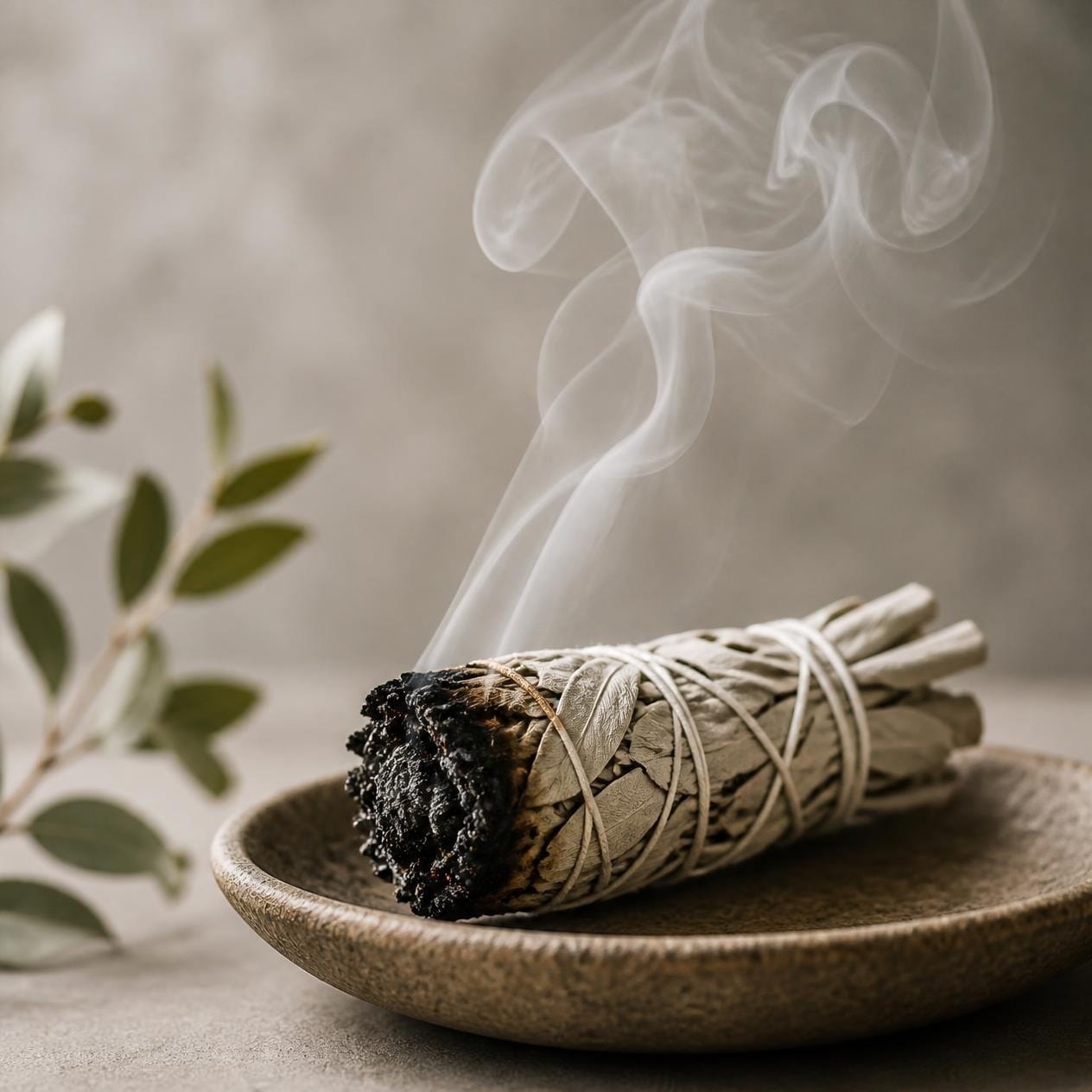
Sage
That heavy, unsettled feeling in a room can be hard to put into words. Perhaps you have moved house, had a difficult conversation, welcomed lots of visitors, or simply reached the point where your space no longer feels like a place to exhale. Learning how to smudge your home can offer a gentle, sensory way to pause, reset your surroundings and return to your own inner calm.
For many people, smoke cleansing is less about chasing away something frightening and more about creating a clear boundary between what has happened and what comes next. It can be a quiet act of care after stress, grief, illness, a busy season or a change in routine. The ritual does not need to be elaborate to feel meaningful.
A mindful note on smudging and smoke cleansing
The word smudging is often used broadly for cleansing a home with fragrant smoke. However, it also refers to sacred ceremonial practices held by particular Indigenous peoples of North America. Those traditions have specific cultural and spiritual meaning, and deserve respect rather than imitation.
For a personal ritual at home, you may prefer the term smoke cleansing. Choose materials thoughtfully, use only what feels appropriate to your own practice, and avoid presenting a simple home ritual as someone else’s sacred ceremony. This approach leaves room for gratitude, intention and care without taking from traditions that are not ours.
There is no rule that says you must use white sage. Many people choose loose incense, incense sticks, ethically sourced herbs, cedar, rosemary or lavender instead. The scent matters, but so does your relationship with it. Pick something you genuinely find comforting rather than something you feel you ought to use.
Before you smudge your home, prepare the space
A cleansing ritual feels more settled when the practical details are already handled. Start by opening a window or external door in the room you are working in. This gives smoke somewhere to travel and keeps the air fresh. If you are able, open a second window elsewhere in the home to create a gentle flow of air.
Tidy only as much as you need to feel comfortable. You do not need a perfectly styled home before you begin. Clearing away yesterday’s mugs, recycling or a pile of laundry can make the ritual easier to focus on, but your home does not need to earn care by looking immaculate.
Place your chosen material in a heatproof dish or bowl. A ceramic dish, metal burner or shell intended for this purpose can help catch ash safely. Keep a small glass of water or a sand-filled container nearby so you can fully extinguish the material afterwards.
It also helps to decide on a simple intention before lighting anything. Your intention is not a test of whether you are spiritual enough, and it does not need to sound poetic. It may be as straightforward as: “May this home feel peaceful and protected,” “I release the tension from this week,” or “I welcome rest and kindness here.”
How to smudge your home step by step
Begin in the room that feels most in need of attention, or start near your front door and move through the home in a calm, consistent direction. Some people like to move clockwise, while others simply follow the natural layout of their rooms. The route matters far less than being present as you go.
Light the end of your herb bundle or incense, allow the flame to catch briefly, then blow it out so it produces a small, steady stream of smoke. You are looking for a gentle ember, not a large flame. Hold the dish beneath it at all times.
Move slowly around the edge of the room. You may guide a little smoke into corners, around doorways, near windows and beside areas where people often sit or sleep. There is no need to fill the room with smoke. A light fragrance and a few intentional moments are enough.
As you walk, repeat your chosen words quietly or in your mind. If affirmations do not feel natural, simply notice your breathing and the feeling of your feet on the floor. You might imagine the room becoming lighter, quieter or more like itself. Let this be a practice of attention, rather than a performance.
When you have finished one room, move to the next. In smaller homes, it may be enough to cleanse the entrance, living area and bedroom. In a larger home, take breaks if you need them. A ritual intended to soothe should not leave you rushed, overwhelmed or coughing from too much smoke.
Once you have reached the final room, return to the open doorway or window and pause. You could say a few words of thanks, ring a bell, clap gently, play calming music or simply stand in silence. Then make sure every ember is completely extinguished. Check again after a few minutes before disposing of the cooled remains.
Give the space something to welcome
Cleansing is often described as releasing stagnant or unwanted energy, but it can feel more complete when you consciously welcome in the qualities you want to nurture. This might be peace, confidence, laughter, rest, creativity or a sense of belonging.
You could place a favourite crystal on a shelf, light a candle once the smoke has cleared, make a cup of herbal tea or put fresh bedding on the bed. These ordinary acts help translate your intention into the practical atmosphere of your home. Spiritual care and everyday care can sit beautifully together.
Smoke cleansing safely and considerately
Your wellbeing comes first. Never leave burning herbs or incense unattended, and keep them away from curtains, soft furnishings, paper and children. A bowl that feels heatproof at the start can become surprisingly hot, so place it on a protected surface when you put it down.
If you live with pets, babies, someone with asthma, allergies or another respiratory condition, smoke cleansing may not be the right choice. Birds in particular are highly sensitive to airborne smoke and fragrances. Choose a smoke-free alternative instead, or speak to an appropriate healthcare professional where health concerns are involved.
Be mindful of smoke alarms, shared entrances and neighbours, especially in a flat or rented property. Opening windows, using very small amounts of material and checking your tenancy agreement can prevent a peaceful ritual becoming a stressful afternoon.
You do not need to force yourself through a scent that causes headaches or makes you feel uneasy. A ritual should support your comfort, not override it. If smoke does not suit your home, your intention can still be just as powerful.
Gentle alternatives if you do not want to use smoke
A home can be refreshed in many ways. Sound is a lovely option: ring a bell through each room, use a singing bowl, clap in corners or play music that makes the space feel brighter. The change in sound and your focused movement through the room can create a clear sense of transition.
You might also open windows, sweep from the back of the home towards the front door, or use a diffuser with pet-safe oils if appropriate for your household. A small bowl of salt placed in a room for a short time is another ritual some people enjoy, though it should be kept safely out of reach of children and animals.
Visualisation works well too. Stand at the centre of a room, breathe slowly and imagine a warm, calm light filling the space. It may sound simple, but simplicity is often what makes a practice easy to return to when life feels full.
When should you cleanse your home?
There is no fixed schedule. Some people smoke cleanse after an argument, illness, a visitor leaving, a house move or a period of emotional pressure. Others make it part of a new moon ritual, a Sunday reset or seasonal cleaning. It depends on your beliefs, your home and what feels supportive rather than burdensome.
Try not to treat cleansing as something you must repeatedly do because your home is unsafe or because you are worried you have done it incorrectly. If the ritual begins to increase anxiety, step back. Ground yourself with something practical: eat a nourishing meal, speak to a trusted person, rest, or spend time outside.
Your home does not have to be perfect to be peaceful. A little fresh air, a clear intention and a moment of gentle attention can be enough to remind you that this space is yours - a place where you can soften, restore and begin again.